
How Foil Stamping Works: Step-by-Step Guide

19 January 2025

Share this article

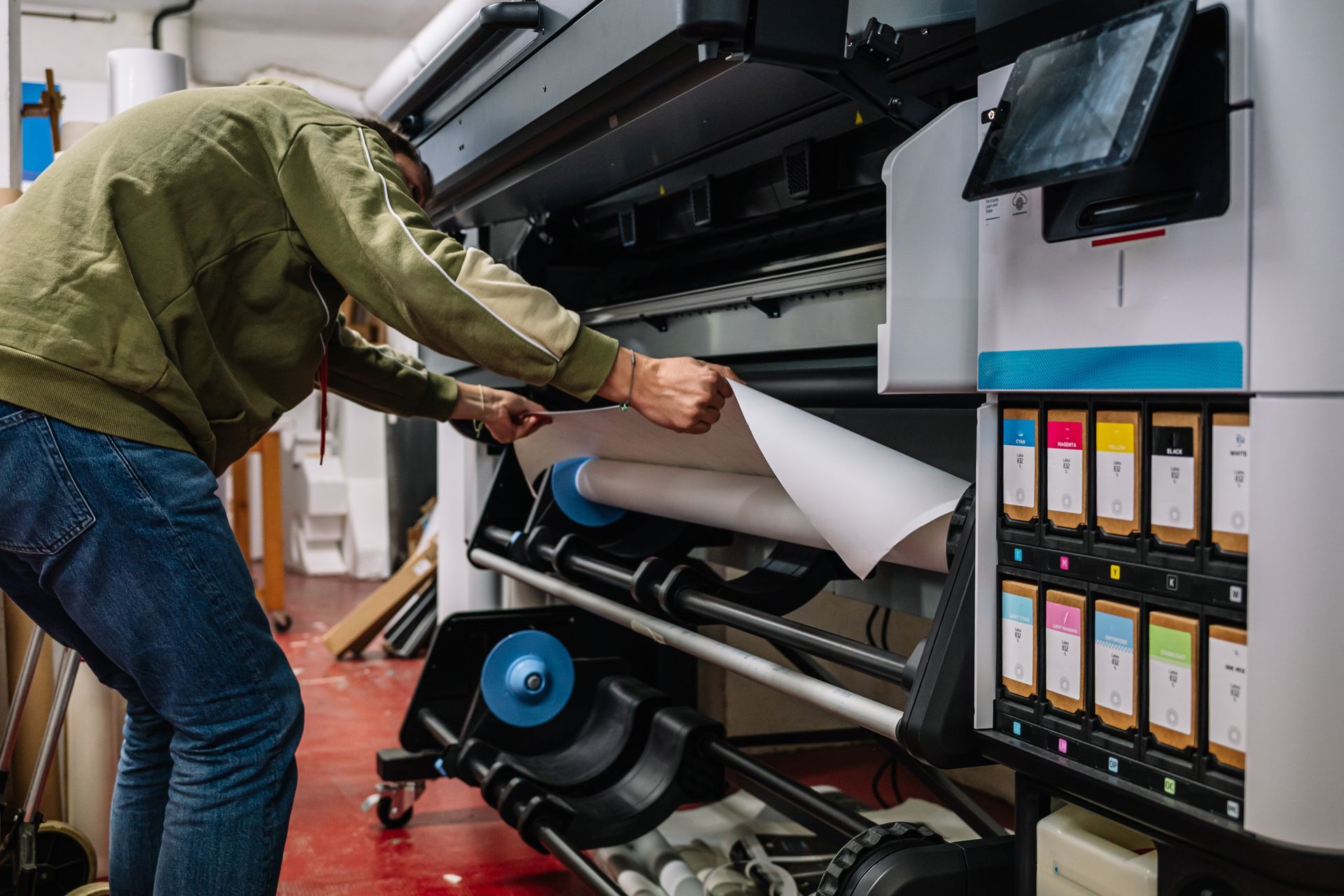
Foil stamping is a printing method that uses heat and pressure to apply metallic or colored foil onto materials like paper, cardboard, leather, and plastics. It’s commonly used for luxury packaging, business materials, and special event items to create eye-catching, reflective designs.

Key Steps in Foil Stamping:

Tips for Best Results:

Foil stamping adds a polished, metallic finish to designs, making them stand out with precision and elegance.

Step-by-Step Guide to Foil Stamping

Step 1: Preparing the Design

Start by creating your design using vector-based software like Adobe Illustrator for sharp and accurate results. Key steps in this process include:

Step 2: Making the Die

The die plays a crucial role in achieving top-notch results. The material you choose depends on your project needs:

Step 3: Applying the Foil

This step involves heating the die to the right temperature, placing the foil between the die and the material, and applying just the right amount of pressure. Proper temperature control is essential for a smooth transfer and to prevent damage [1] . Skilled handling ensures consistent results [2] .

Step 4: Inspecting the Final Product

Quality checks are essential to ensure a polished finish. Focus on:

Thorough inspection helps you deliver a flawless product, but it all starts with careful planning and the right materials [1] [2] .

Tips for Getting the Best Results with Foil Stamping

Choosing the Right Materials

The success of foil stamping starts with picking the right materials. Coated stocks are ideal for paper and cardboard projects because their smooth surface works well with foil. Metallic foils add a shiny finish, matte foils offer a more understated look, holographic foils create eye-catching effects, and pigmented foils provide solid color coverage. After selecting your materials, running thorough tests is key to achieving the best results.

Testing Before Final Production

Running small tests is crucial to fine-tune settings like temperature, pressure, and material compatibility. These tests help you avoid common issues and ensure:

If problems come up during testing, collaborating with experienced printers can help you find effective solutions.

Working with Experienced Printers

Partnering with professional printers can make a big difference in your foil stamping project. Companies like Miro Printing & Graphics Inc. have the expertise to refine designs, select the right materials, and execute precise stamping techniques. Their knowledge ensures high-quality results and consistent production.

Experienced printers also provide access to advanced equipment and can handle a variety of materials and designs. They can offer valuable guidance on improving designs and resolving technical issues, helping you achieve the best possible outcome [1] [2] .

Related video from YouTube

sbb-itb-ce53437

Common Problems in Foil Stamping and How to Fix Them

Even with top-notch materials and techniques, challenges can pop up during foil stamping. Here’s how to tackle them head-on.

Avoiding Too Much Foil Application

Excess foil can be a frustrating issue for printers. Opting for adhesive-backed foils designed for precise use can help create strong bonds without wasting material.

To get clean, polished results:

For intricate designs, steer clear of type sizes smaller than 8 points. Smaller sizes tend to cause plugging and foil buildup, which can ruin the final look [4] .

While calibration plays a big role in preventing over-foiling, ensuring proper alignment is just as important for professional-quality results.

Solving Misalignment Problems

Misalignment often happens due to poor die preparation or uneven material surfaces. To keep everything in line during the stamping process:

If you notice misalignment, stop production immediately to adjust your setup. Print shops like Miro Printing & Graphics Inc. rely on thorough quality control checks to spot and fix alignment problems early, ensuring they don’t disrupt large-scale projects [1] [2] .

Conclusion

Foil stamping adds metallic finishes to designs through careful planning, the right materials, and precise execution. As covered earlier, success depends on using vector-based artwork, selecting the appropriate foil, and applying it with care [1] [5] .

Modern automated controls enhance consistency in commercial foil stamping, ensuring proper adhesion and reducing errors. For intricate designs or large-scale production, working with experienced print shops can make a big difference. Companies like Miro Printing & Graphics Inc. excel in this area, offering in-house design expertise and thorough quality checks to avoid costly mistakes and deliver top-tier results [2] [6] .

Foil stamping demands both technical skill and hands-on experience. While small projects might be doable in-house, more complex or high-volume jobs often benefit greatly from professional help. Investing in expert services typically ensures consistent, polished results that align with strict quality expectations [5] [6] .

FAQs

Here are clear answers to frequently asked questions about foil stamping, summarizing key points from the article.

What is the process of foil stamping?

Foil stamping involves using heat and pressure to transfer metallic foil onto a surface. A heated metal die presses the foil carrier film onto the material, typically at temperatures between 200-300°F, creating a metallic imprint [1] [2] .

What materials are suitable for foil stamping?

How can I achieve the best results with foil stamping?

Use vector-based artwork created in professional design tools. Keep text sizes at least 8 pt and avoid overly detailed designs to ensure clean transfers. Proper spacing between elements helps prevent transfer issues like bleeding [4] [6] .

What are common issues with foil stamping?

Some common problems include:

What types of foil finishes are available?

Foils come in various finishes, including:

For more detailed instructions, refer to the step-by-step process and tips shared earlier in the article.

Related posts

Recent Posts

A person shows a printed sheet with the word
22 May 2025
Affordable book printing in North Bergen, NJ. Let us bring your vision to life. Contact Miro Printing & Graphics, Inc. today for expert printing services.
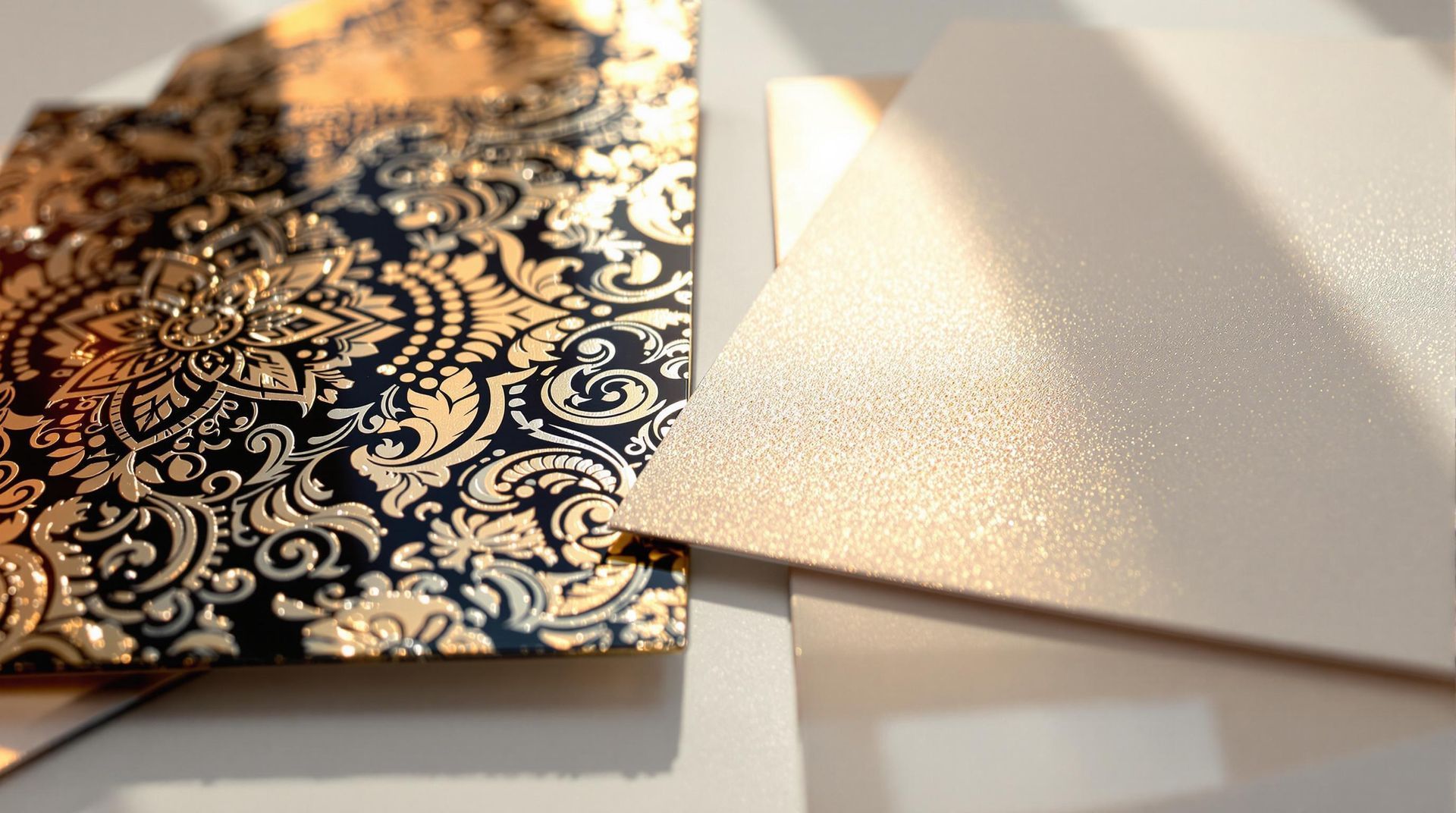
Two overlapping rectangular cards: one with a gold ornate damask pattern on black, the other a textured, matte cream.
19 January 2025
Explore the differences between foil stamping and metallic ink to choose the best metallic finish for your printing projects.
A cluttered wooden desk covered in scattered sheets of paper, stationery, a laptop, and various office supplies.
18 January 2025
Learn how to choose the right paper for custom prints, considering types, finishes, durability, and project goals for optimal results.
A printer on a desk next to a laptop displaying colorful design samples, with scattered prints and art supplies.
18 January 2025
Explore personalized print design, its importance, essential components, and practical steps for creating impactful printed materials.

A worker wearing a light apron and gloves writes on a document at a table in a bright, industrial printing factory.
18 January 2025
Learn how to effectively identify and address surface coating defects in printing to enhance product quality and customer satisfaction.

A person in a lab coat uses a magnifying glass to inspect a colorful print coming off an industrial printing press.
18 January 2025
Learn how to troubleshoot and prevent surface coating defects in printing for consistent, high-quality results.
A desk with a stack of white paper, a printer, and a potted plant in front of a window in a sunlit room.
17 January 2025
Explore practical strategies for selecting eco-friendly paper that saves costs and reduces environmental impact through smart printing choices.
A stack of brown recycled paper on the left and white paper on the right, set against a backdrop with soft leaf shadows.
17 January 2025
Explore the cost, energy, and environmental impacts of recycled versus virgin paper to make informed choices for your printing projects.
A Pantone color swatch book lies open on a table, displaying a grid of various shades of blue and green.
17 January 2025
Explore the Pantone Matching System for precise color reproduction in printing, ensuring brand consistency across various materials.
A large printing press in an office, with a split-screen effect showing cool blue tones on the left and warm gold on the right.
17 January 2025
Understand the differences between RGB and CMYK color models to ensure accurate color reproduction in digital and print designs.
Show More